After three years without an audience, the 28th Fenasucro & Agrocana reached R$ 5.2 billion in business deals. The demand for expansion in the sugar and ethanol production sector and the opportunities for energy generation from natural sources boosted sales.

And it’s no wonder, entrepreneurs and specialists are increasingly realizing the potential of our country in renewable energy generation. Today it is possible to have energy in an efficient process from gases treated with effluents, sewage, and landfills.

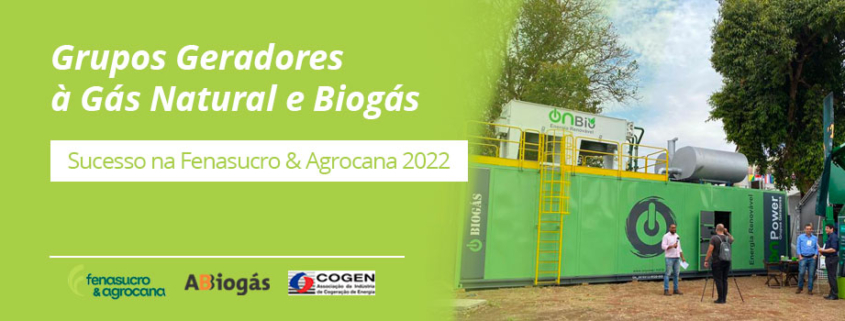
Problems such as high lubricant oil consumption, low energy efficiency, high emission of polluting gases, low availability, and shorter lifespan until a major overhaul were solved with the technology and innovation of OnPower’s Natural Gas and Biogas Generator Sets.

The successful launch of the product at Fenasucro & Agrocana 2022 was reported in various industry media and Brazilian journalism. The product also surprised energy industry experts, who highlighted its high electrical efficiency combined with low operating costs and the possibility of financing through BNDES (Brazilian Development Bank).

After three years without an audience, the 28th Fenasucro & Agrocana reached R$ 5.2 billion in business deals. The demand for expansion in the sugar and ethanol production sector and the opportunities for energy generation from natural sources boosted sales.

And it’s no wonder, entrepreneurs and specialists are increasingly realizing the potential of our country in renewable energy generation. Today it is possible to have energy in an efficient process from gases treated with effluents, sewage, and landfills.

Problems such as high lubricant oil consumption, low energy efficiency, high emission of polluting gases, low availability, and shorter lifespan until a major overhaul were solved with the technology and innovation of OnPower’s Natural Gas and Biogas Generator Sets.

The successful launch of the product at Fenasucro & Agrocana 2022 was reported in various industry media and Brazilian journalism. The product also surprised energy industry experts, who highlighted its high electrical efficiency combined with low operating costs and the possibility of financing through BNDES (Brazilian Development Bank).

According to Abiogás, the country uses only 2% of its total capacity. At Fenasucro 2022, OnPower presented its line of biogas-powered generator sets, which should reduce dependence on the external market.

According to the entity, which discussed the topic at Fenasucro & Agrocana, the country’s potential is to produce 120 million cubic meters of biogas per day, but the amount generated in 2021 was only 2.3 million. However, by 2030, the forecast is that the daily capacity will reach 30 million.

During the fair in Sertãozinho (SP), considered one of the largest bioenergy events in the world, OnPower presented its line of biogas generator sets with power ratings from 477 to 1,000 kVA. The technology, which has Brazilian engineering, should reduce dependence on the external market, since this power range was previously only supplied by manufacturers abroad.

According to the president of Abiogás, Alessandro Gardemann, biogas production has experienced a tenfold growth in the last ten years. And, in the next eight years, industrial investments are expected to reach R$ 60 billion, mainly from sugarcane processing plants, which will also be the main beneficiaries.

Where biogas can be used

Biogas is a mixture of carbon dioxide and methane used in the generation of electricity and fuel. It is extracted from the processing, through biodigesters, of any organic residue, such as bagasse and straw from sugarcane, rice and corn straw, cottonseed, garbage, and animal waste. Biogas can also be purified, generating biomethane, which can replace derivatives of fossil fuels, such as gasoline, diesel, and natural gas, in vehicles such as cars, buses, tractors, and other agricultural machinery.

Gardemann explains that agribusiness generates a lot of waste without proper disposal. In addition to biogas, the processing results in organic fertilizer, which, when applied to crops, can increase agricultural production. Furthermore, according to him, rural producers can reduce costs, since it is possible to utilize waste from various activities within the same property.

For Tamar Roitman, executive manager of Abiogás, biogas has the potential to generate a great impact not only in the field, but throughout society.

Biogas Generator Set Manufactured in Brazil

The biogas generator set was presented during Fenasucro by the company OnPower, with Brazilian engineering. According to Fernando Lemos, commercial manager, the fair was the stage for the national launch of the technology.

OnPower owns the largest thermoelectric power plants in Brazil and Argentina. After identifying a need to generate energy from biogas, the company developed the generator set with financing from the National Bank for Economic and Social Development (BNDES). “The market is booming and is looking for the best acquisition option in the national market.”

Lemos says the equipment can help achieve carbon neutrality by burning methane found in biogas, not only from agricultural waste but also from landfills and water treatment plants.

Source: G1 and Abiogás

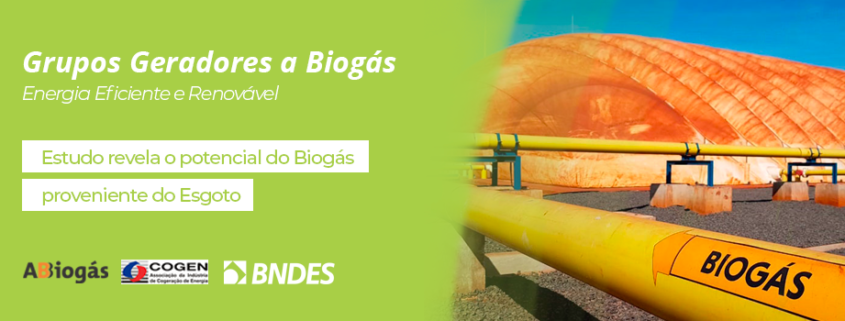
According to a study conducted in partnership with sector entities, coordinated by Abiogás (Brazilian Biogas Association) last year, the national goal of universalizing water and sewage services by 2033, contemplated in the sanitation regulatory framework published in 2020, should increase the potential for biogas generation from sewage treatment by more than 85%.

The generation estimate is based on the expectation that approximately 192 million Brazilians (84.5% of the population) will have their sewage treated by anaerobic routes by 2033, generating biogas as a byproduct that can be used for electricity or thermal energy generation or transformed into biofuel (biomethane) through purification.

In a short-term projection until 2023, the potential would range between 568 million m³ and 692.1 million m³ of biogas/year, depending on the percentage of anaerobic treatment, which would be converted into 1.6 TWh of electricity, 1.8 TWh of thermal energy, or the equivalent of up to 475 million liters of diesel replaced by vehicular biomethane.

Current Potential

Based on consolidated sewage treatment data available from 2019, in which just over 106 million inhabitants are served by sewage collection and treatment networks, the biogas production potential is 493.4 million m³ of biogas. In this case, the Southeast region accounts for 71% of the potential, followed by the South region with 14%.

The potential volume calculated for 2019 could supply 1.18 TWh/year of electricity, representing the annual electricity demand of a city with 587,000 residences, or the generation of approximately 375.5 million m³/year of biomethane, replacing 347.7 million liters of diesel.

Despite this potential, the use of biogas from wastewater treatment plants (WWTPs) comes from only 10 plants installed in Brazil, including 9 WWTPs and one co-digestion plant for sewage sludge and food waste.

About 83% of this biogas volume is used for electricity generation in units with an average installed capacity of 1 MW, generating only 24 MWh of electricity per year in Brazil from WWTPs. For biomethane production, only 4% of the biogas generated in the country by wastewater treatment plants (WWTPs) is used, which corresponds to 912,500 m³/year of biogas. The only plant that purifies biogas from sanitary sewage for biomethane production is owned by the São Paulo state sanitation company, Sabesp, in Franca (SP).

Biogas production continues to rise

Currently, there are 109 medium-sized plants, with annual production between 1 and 5 million Nm³/year, and 51 large-scale plants, producing from 5 to 125 million Nm³/year.

In 2021, the total production of all biogas plants in the country reached 2.3 billion Nm³, more than double the 2017 figure, in a growing trend that saw 2.14 billion in 2020 and is estimated to reach at least 2.8 billion in 2022.

The compiled data for 2021 shows that 102 new plants began operating (a 16% increase compared to 2020) and there was a 10% increase in the volume of biogas produced, with an additional 209 million Nm³.

Minas Gerais and Paraná have the most biogas plants.

In total, 20 states have biogas plants. Minas Gerais, with a total of 251 plants (25 new), and Paraná, with 159 (22 new), lead the ranking of states with the most active plants. Santa Catarina and Goiás registered growth of 28% and 24% in the number of plants in operation, respectively.

In 2021, the first biogas generating units with energy recovery were registered in Alagoas and Rondônia on BiogasMap. The states of Acre, Amapá, Piauí, Rio Grande do Norte, Roraima, and Sergipe remained without any registered biogas plants that perform any type of energy recovery.

Of the 811 biogas plants cataloged, 755 are in operation with energy recovery (93%), 44 are in the implementation phase (5%), and 12 are undergoing reformulation or renovation (2%) and should return to operation in 2022.

In absolute numbers, there was a 20% growth compared to the previous year (675 plants), indicating that the market continues to expand.

The Power of Biogas

Even in a pandemic scenario, with fluctuations in the price of a barrel of oil, the rise in the dollar – which triggered an increase in fuel and LPG prices – and a water crisis, the Brazilian biogas industry remains strong.

According to ABiogás, the development of the national industry of suppliers of goods and services for the biogas sector is growing, and this has helped to reduce the installation costs of biogas and biomethane plants in the country.

Considering the scenario of 2.3 billion cubic meters of biogas generated in 2021 by the 755 plants in operation, Brazil is only exploiting 3% of this potential. However, when considering short-term production potential, that is, taking into account only residues and effluents that do not present obstacles to immediate access within the livestock, industrial, and other supply chains…

O papel dos pequenos produtores no mercado do biogás